Surface finishing has evolved from a labor intensive task to an engineering procedure that is precise. In today’s manufacturing landscape the quality of coatings has a direct impact on durability, corrosion resistance as well as overall perception of the product. Many factories employ paint robots for better control and maintain consistency as global standards become more stringent and customers demand flawless finishes.
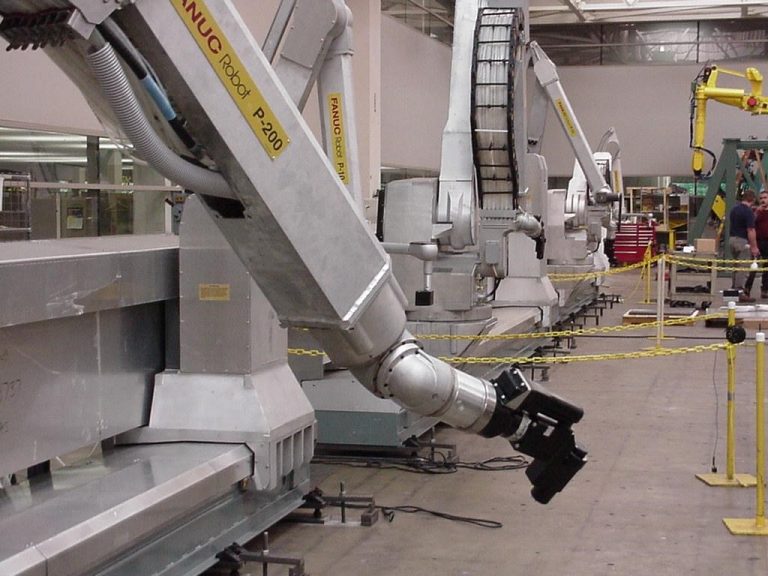
Image credit: automatedsolutions.com.au
Modern paint robots provide structured motion and programmable precision to processes that previously relied on operator skill. Automating the paths and angles of spray and speed, eliminates a lot of irregularities that can lead to uneven film builds or excessive material usage. The result is a predictable coating process that allows for more efficient First Time Quality and reduced Rework.
Consistency and efficiency are key to measurable outcomes
Due to fatigue or small variations in technique, hand painting can lead to variations in coverage and thickness. Paint robots eliminate this variation as they repeat the exact motion pattern throughout each production stage. This kind of repetition provides an uniform surface finish and optimal material distribution on each part.
Advanced robotic paint systems also improve the efficiency of transfer. Overspray is minimized by maintaining a precise distance between the applicator, and the component. This allows more coating to get on the surface of the intended. Lower material waste directly impacts cost savings, while decreased emissions of volatile organic compounds support efforts to ensure environmental compliance.
The integration of the handling of fluids into paint robotics ensures accuracy in mixing ratios of multi-component coats. It eliminates any inconsistencies which can compromise the integrity of the finish. The combination of stable flow control as well as programmable parameters allows producers to fine tune atomisation settings and spray patterns in real time without disrupting production.
Productivity and safer workplaces
The longer time between maintenance is a important benefit of an automated paint system. Robotic paint cells are more efficient than manual operation because they run without interruption. Once programmed, they can provide an unbroken flow of paint without breaks or constant supervisory supervision.
In facilities handling solvent-based or two-component coatings safety considerations are essential. Paint that is atomized could create dangerous situations, particularly when working with materials that are flammable, or reactant. Modern paint robots are engineered for safe operation in demanding environments, helping reduce personnel exposure to harmful substances and improving workplace safety standards.
Conveyor tracking technology can further enhance productivity by allowing robotic painting of components while they are in motion. This technology increases the working space, and also ensures that production lines run efficiently.
Australian Automation Expertise Supporting Industry
For manufacturers seeking to modernise their finishing processes having access to experienced automation partners is crucial. Automated Solutions in Australia has gained a reputation for providing the most advanced robotic integration solutions. The team has vast experience in automation engineering and has been certified as FANUC robot integration experts. They assist companies in implementing robot paint solutions that are tailored to their specific needs.
Automated Solutions helps manufacturers evaluate their processes and develop robotic paint cells, combining industry expertise with technical knowledge. Through collaboration in planning, simulation, and integration of systems, companies gain a clear understanding of expected improvement in performance prior to installation.
Paint robotics is not only automation. It is about improving quality, safety and efficiency. Highly-engineered paint robotic systems transform the surface finishing process into a cost-effective, time-consuming, and unreliable operation into an automated, reliable procedure. Manufacturers can boost their competitiveness by collaborating with experts in automation who are experienced in helping them to succeed over time in an ever more demanding.